
Step 1:
Build a dungeon out of blocks
Build a dungeon out of blocks
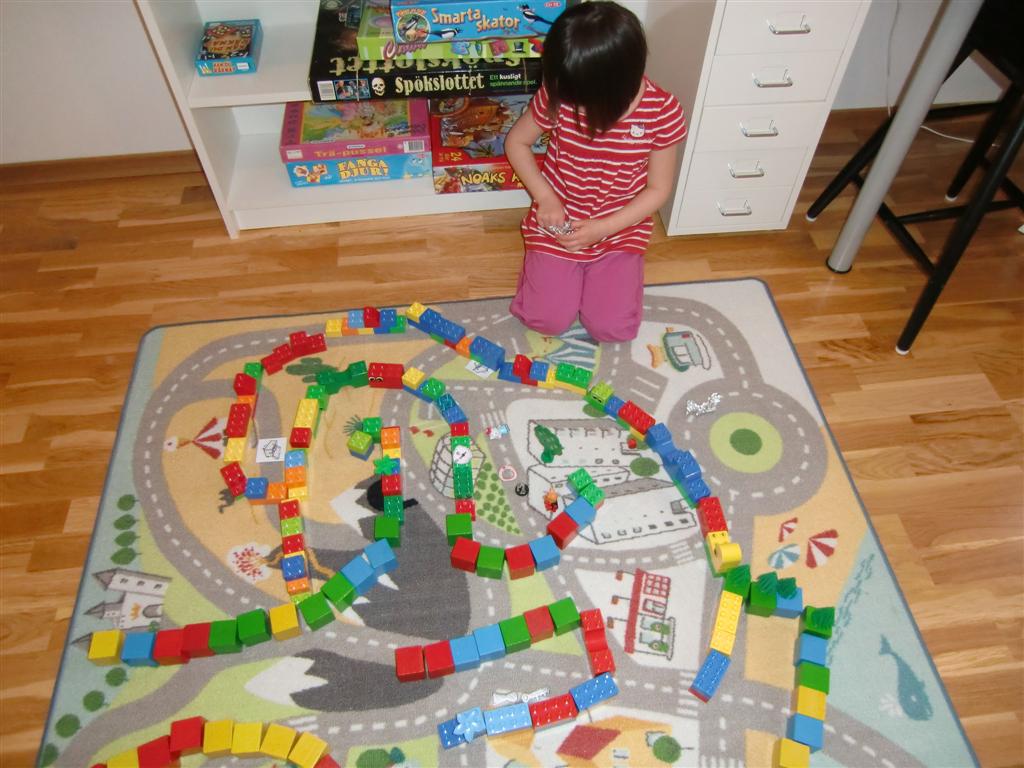
You've got loads of toys sitting around underutilized. Take your kids set of blocks and build a maze with them.
Step 2:
Come up with a story
Come up with a story
A princess has been captured by an evil monkey wizard! Your pet rabbit is lost in a cave. A magic necklace was stolen from queen! Kids like to help others and there's no better feeling than saving the day. Come up with a fun storyline to keep them going.
Step 3:
Download and print out Kids Dungeon Adventure
My daughter and I developed a lightweight ruleset that a 4 year old can enjoy. Included in the rulebook are instructions for:
- Coming up with storylines
- Setting up treasures
- Monster cards to populate your dungeon
- How to introduce your child to role playing games and increasingly complex creative play
- Battle rules that even a 4 year old can follow
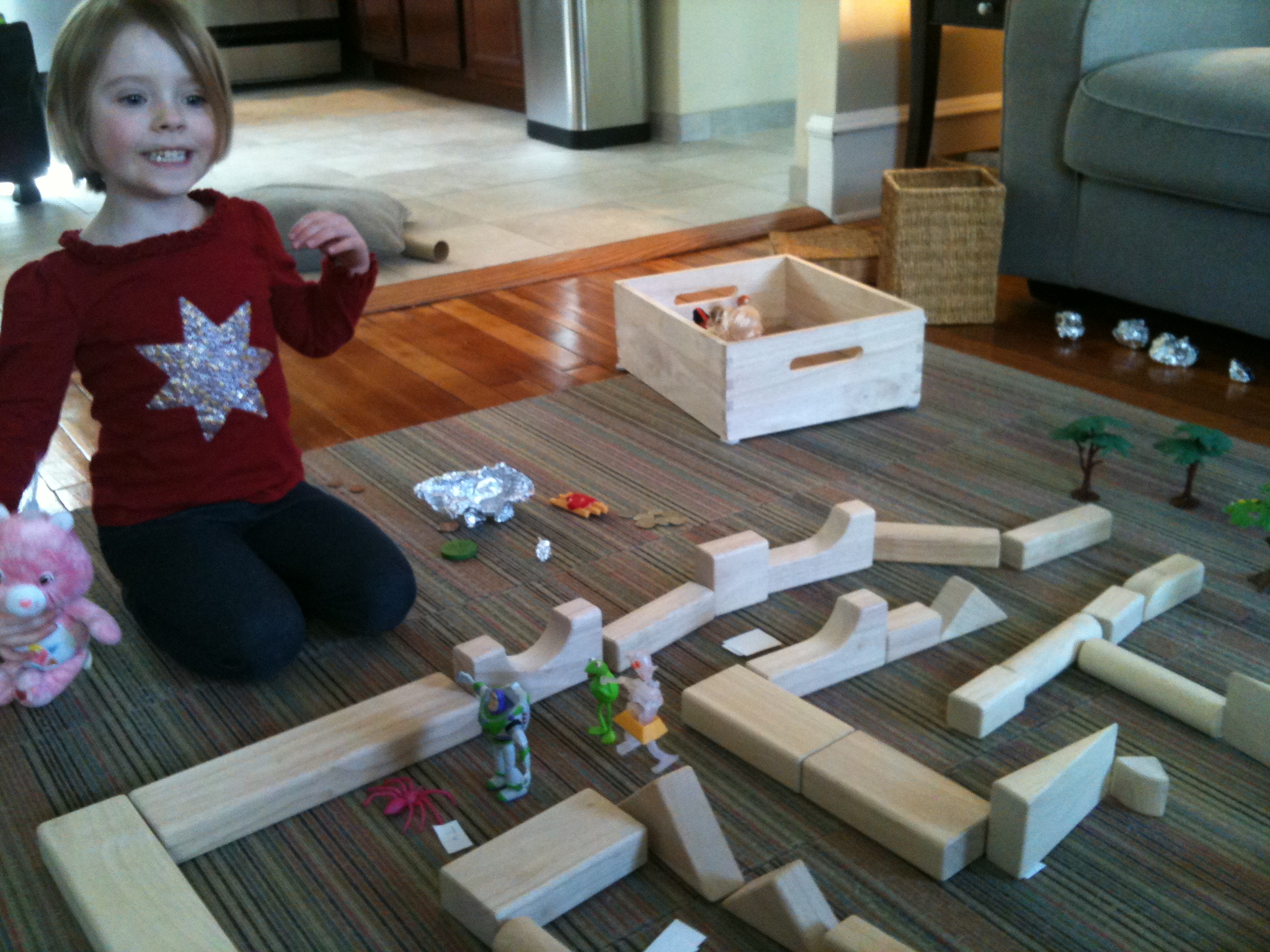
Build a world for your kids to play in
Kids love to use their imaginations and a lightly structured game environment is a great way to use it.
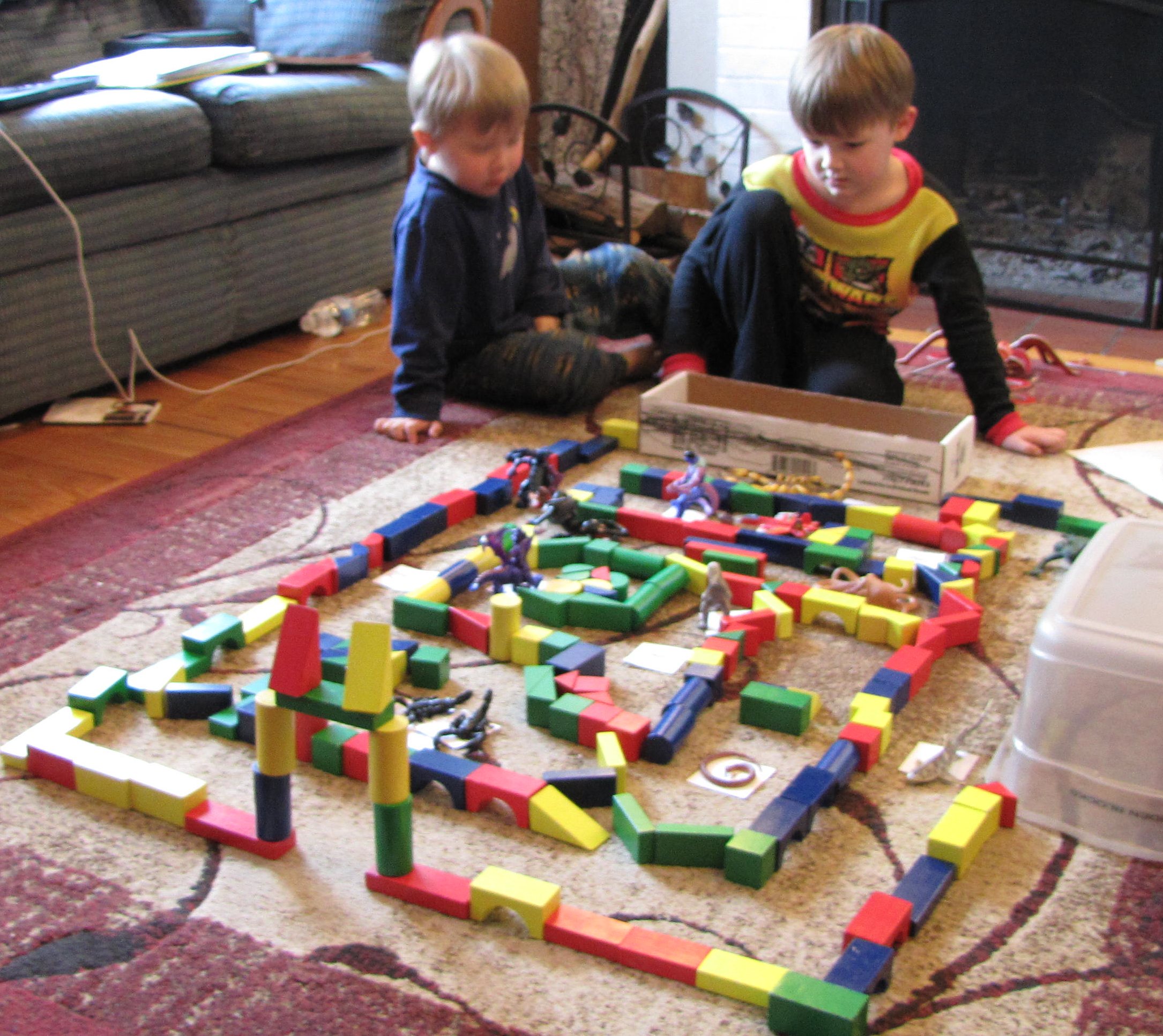
Endless Play
Every game is different. It's only limited your ability to come up with new scenarios (and your block supply).

You already have most of what you need
Utilize toys you haven't played with in a while in creative ways.
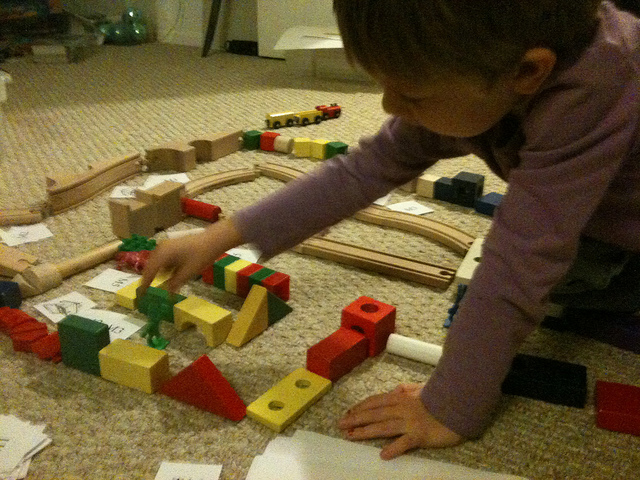
Fun for kids as young as 4
I made the game to play with my 4 year old daughter. The complexity can easily be increased as they get older.
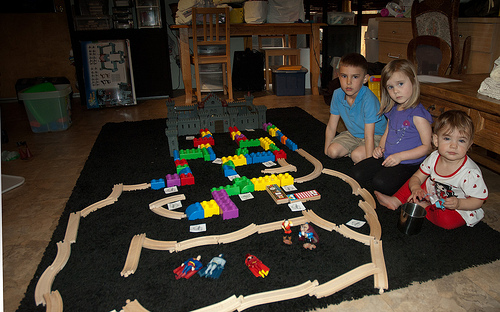
Fun for both boys and girls
Game plots can be tailored to whatever your kids are into (super heroes, animals, etc.)
It's played around the world
I've gotten emails from dungeon adventurers across the globe.
Kids Love It
Some quotes I've received are, "This is better than Video Games!!," and "he asked me to play 3 times the very first day and has asked me to play every day since, as soon as he gets home it's the very first thing he asks."
LOOOOVED it!!
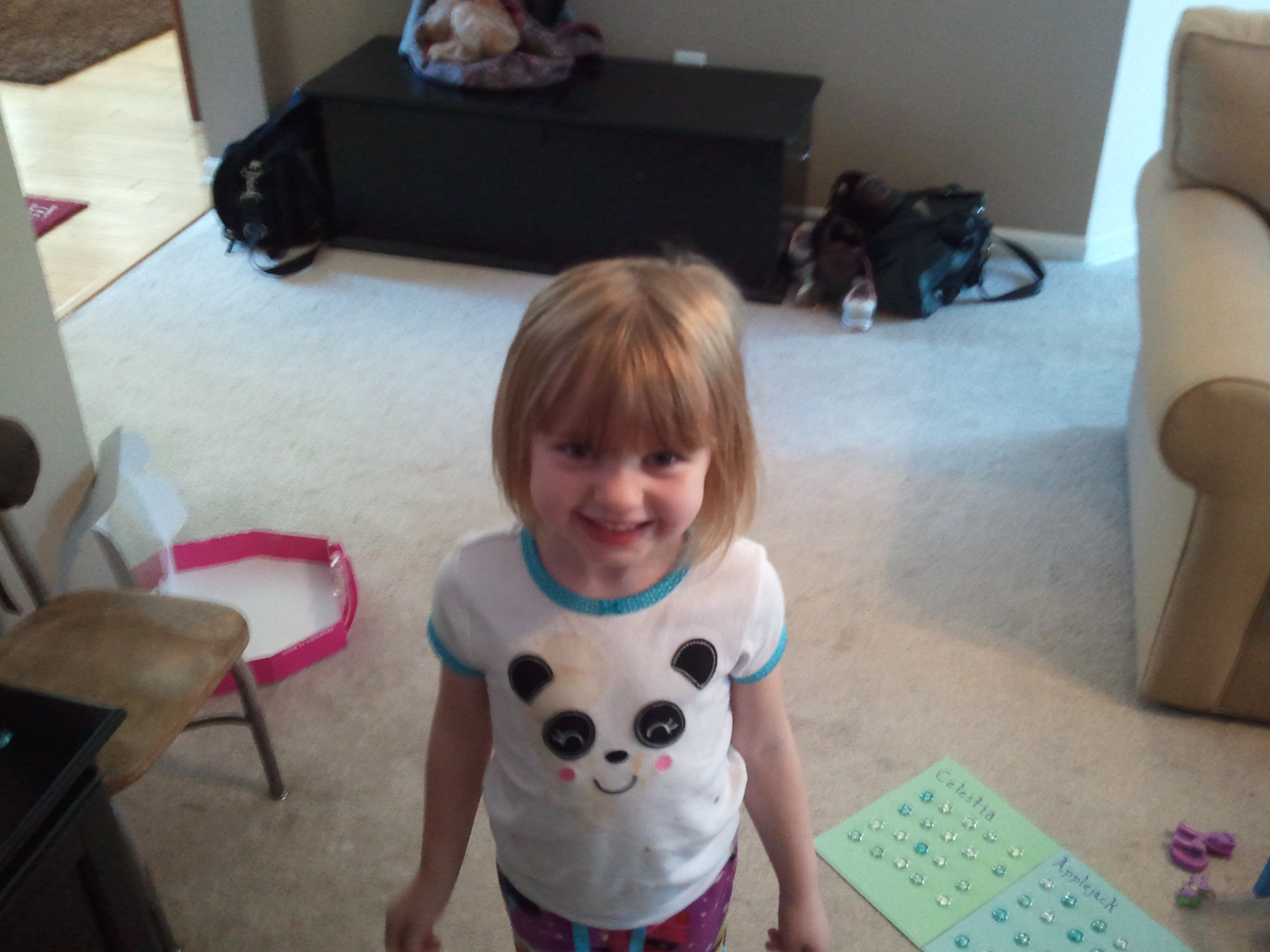
Ben, My daughter Maddy and I played this a couple days ago and she LOOOOVED it!! Her ponies rescued a fellow pony captured by a dragon. I used little aquarium rocks as hit point counters cause she can't quite math yet, you can kinda see them on the floor behind her. Thanks for making such a cool game! John
the kids loved it!
>setting up for our first game of Dungeon Adventure @DungeonAdv thanks @bengarvey the kids loved it! https://flic.kr/p/9vB4x3@jeffmincey
EPIC fun
ola Mr @bengarvey ' played your game today with my oldest one, had EPIC fun: https://bit.ly/jr2FJi@kojote
Thanks for the game
Thanks for the game, my kid is 3 1/2 and we started playing imagination games with his pirate toys. He had a lot of fun playiing our first 3 room dungeon adventure.Joesph

As a father, I've waited patiently for nine years for my son to be old enough to play Dungeons & Dragons with me. But, if I'd been more enterprising, I could have invented a full blown RPG for young kids like Ben Garvey has done.Dave Banks, Wired's GeekDad Blog
asked me to play every day
I have a couple of things to share about our experience. First of all, yes it works, my kid loves it, he love it so much that he asked me to play 3 times the very first day and has asked me to play every day since, as soon as he gets home it's the very first thing he asks and seriously, I'm unable to keep up making stories so we repeat the quest he loves adding side quests and changing the maze, I would love to have a place where we could share our quests ideas and get some new, fresh and interesting content into the game. One cool side quests that I added was to find a key to open the cage were pluto was trapped, when I told him that his first reaction was to naturally just opened the cage himself and then I explained to him that he has to find the key first, he didn't understand because he couldn't see the key anywhere but about halfway in the maze he found our house keys inside a treasure and his face just lighted up with excitement and brought the heroes to open the cage but then again, I explained that in order to open the cage he had to defeat the two monsters guards first!, it was amazing for him, we defeated the two guards, he was thrilled and a bit nervous about the whole thing, but I could tell the sense of achievement in his face, unfortunately one of the heroes died in battle but finally the cage was open and pluto replaced the fallen hero.Roberto

The monster cards are one of my favorite parts ' rather than illustrations, the cards feature colorful pictures of toys (spiders, snakes, dragons, etc.) that kids will love.WJWalton, the Escapist
thank you for the initiative
I thank you for the initiative, right now, most games are either online or you have to buy those expensive game boxes fully colored where everything is already assembled, no fun for the parentsEduardo
Huge success!
Greetings from Sweden, and thanks for a great game and idea! Played it first time today with my son Arvid, 4 years. Huge success!Daniel
Smarties for treasure
Playing Dungeon Adventure with the kids. They really like it. Probably because there's marshmallows and Smarties for treasure.@jonathanhliu
We had a blast!
@dungeonadv Just played your game with my 3 year old boy. We had a blast! https://flic.kr/p/9uvHYK@maartenhendrikx

This game is a great way to have fun while teaching basic counting and money management while also presenting challenges and low-impact winning/loosing scenarios. And it's just as fun for Dad as it is for the kids!Mike Mitrovich, Legacy of Fun
magical healing coated peanuts
Played @DungeonAdv with (four) kids for the first time, they enjoyed it a lot and want more, but we're out of magical healing coated peanuts.@ivanassen
I'm a big kid.
I honestly just want to set up a dungeon adventure' for me. Because I'm a big kid. @DungeonAdv@ladydrow
she wanted to play again! =)
Just want to tell you that me and my daughter enjoyed a really good play-through of the Kids Dungeon Adventure game this weekend. We had a very good time! She enjoyed it a lot, and right after we were finished she wanted to play again! =)Mats

We learned about this game about a year ago, and wondered if it was worth the $6 cost. I mean that's literally a six of dollars. For a couple .pdf files of instructions?! So we tried it out, and it was so awesome. It's worth the $6. You can take that to the bank. The bank will endorse our endorsement, because banks are in the business of knowing how many dollars things are worth.Lloyd Dalton, Clockwork.net
-

Ben Garvey is a dad of two and lives in New Jersey. He created the Kids Dungeon Adventure along with his then 4 year old daughter, Sasha. Follow him on twitter. You can also follow @DungeonAdv on twitter.